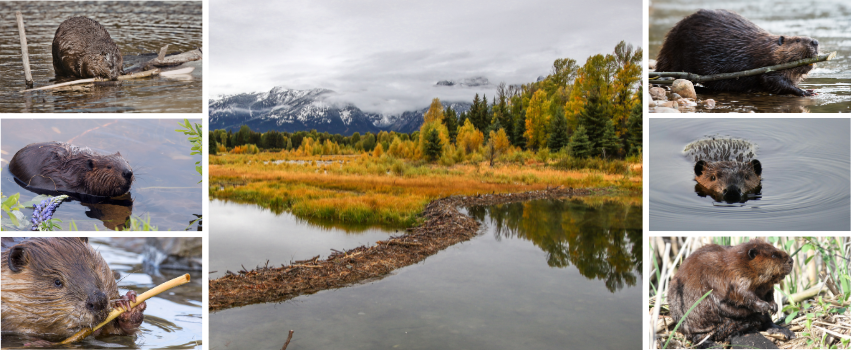
Beavers have played an important role in Jackson Hole throughout history – that importance is still being understood while this keystone species continues to help shape our ecological future.
Beaver Trapping in the West
The thirst for the dense and soft furs of the North American beaver (Castor canadensis) helped to drive European settlement of Jackson Hole and the Greater Yellowstone Ecosystem. In the 1820’s, Jedediah Smith told a reporter that the Hudson Bay Company’s trappers had harvested 80,000 beavers around the Snake River in a four-year period. Just a decade or two later, however, beavers were scarce and trapped out of most drainages in the area.
Without beavers building dams and shaping the ecosystem to their needs, expansion of cattle ranching, and other new land uses, stream systems and riparian habitats in the American West changed over the next 200 years. Unimpeded by once prolific beaver dams, water flowed faster, banks eroded, and the lush, sponge-like riparian habitats began to dry up. We now are starting to understand just how much influence the once abundant beaver had on our ecosystem and landscape.
Beaver Benefits
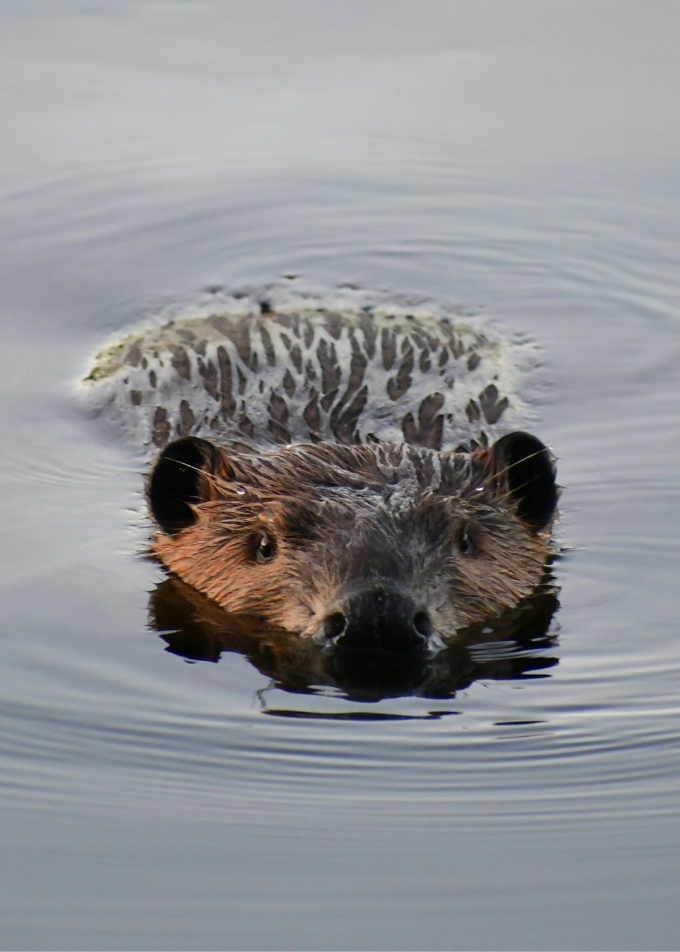
Beavers build dams that turn small streams into deep water ponds. Adapted to a watery environment, they rely on this deeper water to hide from predators, access food and building materials more safely, and cache food for the winter months.
80% of vertebrate species in Wyoming rely on riparian, or wetland, ecosystems, yet these stream-side habitats occur in just 4% of the state’s land area. Beaver ponds are important homes for waterfowl, moose, otters, trout, amphibians, and other species. Beaver created wetlands also moderate floods and water temperatures, store water later into the summer, recharge ground water, filter pollutants, create fire breaks, amongst other benefits to the ecosystem and people alike, particularly in the face of climate change.
Using Beaver-Expertise in Our Work
While beaver populations are rebounding, many of their habitats have been altered by stream degradation, fire, or development. This summer, JHWF is going to be borrowing tactics from beavers to help restore riparian habitats.
1. Trail Creek Project*
One of our exciting “boots on the ground” projects is the Trail Creek Riparian Restoration. Trail Creek is a tributary to Fish Creek. Its headwaters were heavily impacted by the Pack Trail fire in 2024 and much of the riparian vegetation in the area burned.
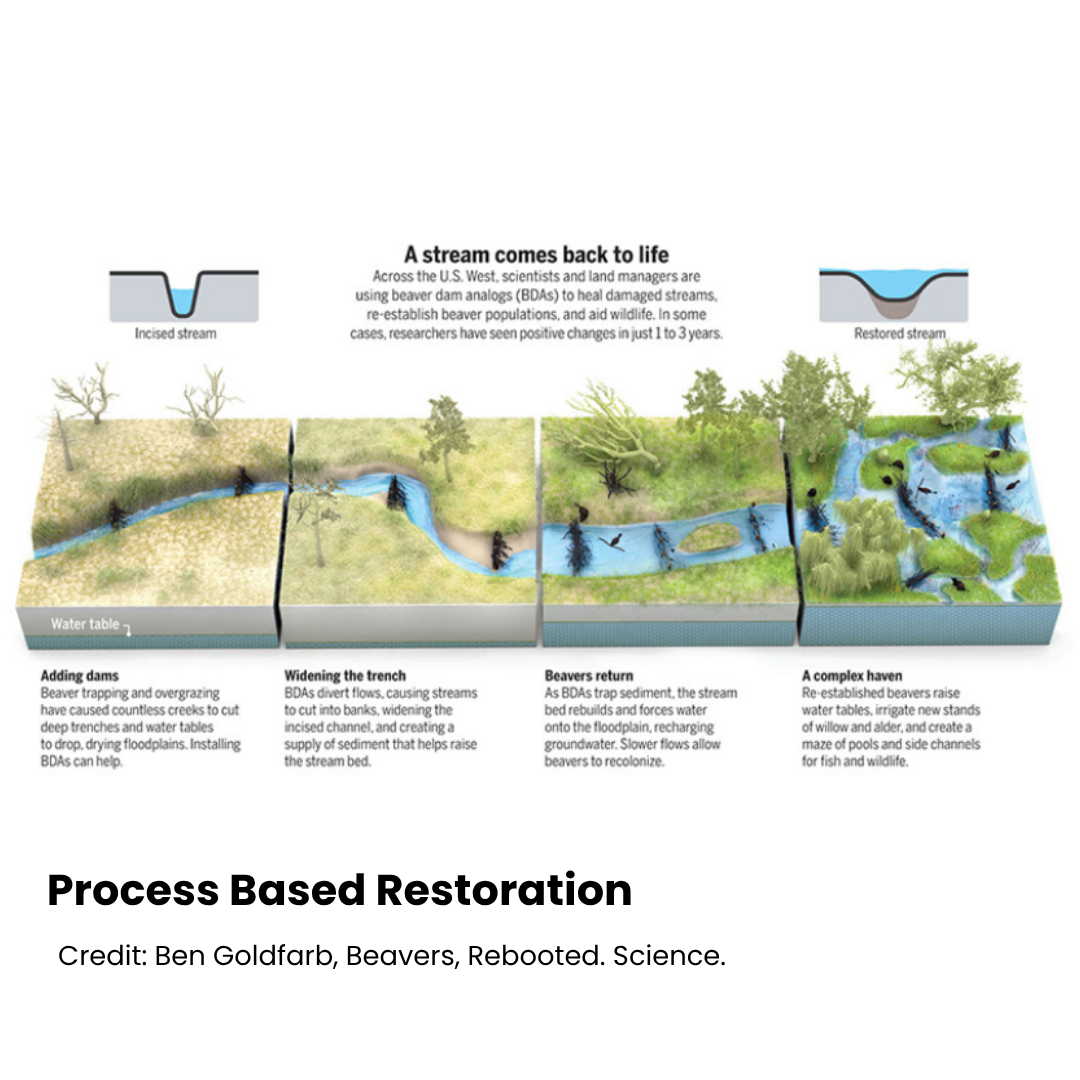
Fire-impacted streams often suffer from increased erosion and loss of riparian habitat. To help this system heal, we will be installing 10–20 Beaver Dam Analogues (BDAs) along a quarter-mile reach. These man-made structures mimic the function of real beaver dams, slowing down water, trapping sediment, and storing more water in the soil – eventually helping to restore and expand streamside habitat so inviting that real beavers might just decide to move back in. *This work is permit-dependent
Click the arrows on the right of the image to see more about process-based restoration.


2. Sublette County Stream Restoration
The eastern front of the Wyoming Range holds critical habitat for mule deer, pronghorn, elk, and sage-grouse. Many of the perennial and ephemeral stream systems these species and others rely on in the region are also very degraded. We are teaming up with the BLM to repair BDAs, plant willows, and build Zeedyk structures in several priority streams. This restoration work will help to restore wet meadows, stop erosion, and hold water in drought-stressed waterways.
You Can Make a Difference
Restoration isn’t a “one and done” deal – it’s a commitment. The Trail Creek project is at least a three-year endeavor, and we need your help to make it happen.
- Volunteer: Pending final permitting, we are hosting a 2-day volunteer project in September 2026 to help install BDAs and kickstart the process on Trail Creek. Keep an eye out for the official project announcement and sign up.
- Long-term Stewardship: Following the installation, we’ll conduct annual visits for maintenance and adaptation, ensuring these structures do their job as the landscape evolves.
- Donate: Support this work by donating to Jackson Hole Wildlife Foundation and ensure that habitat restoration is done right.